Discover Iran: the network of rivers, lakes, and wetlands of Sistan-Baluchestan
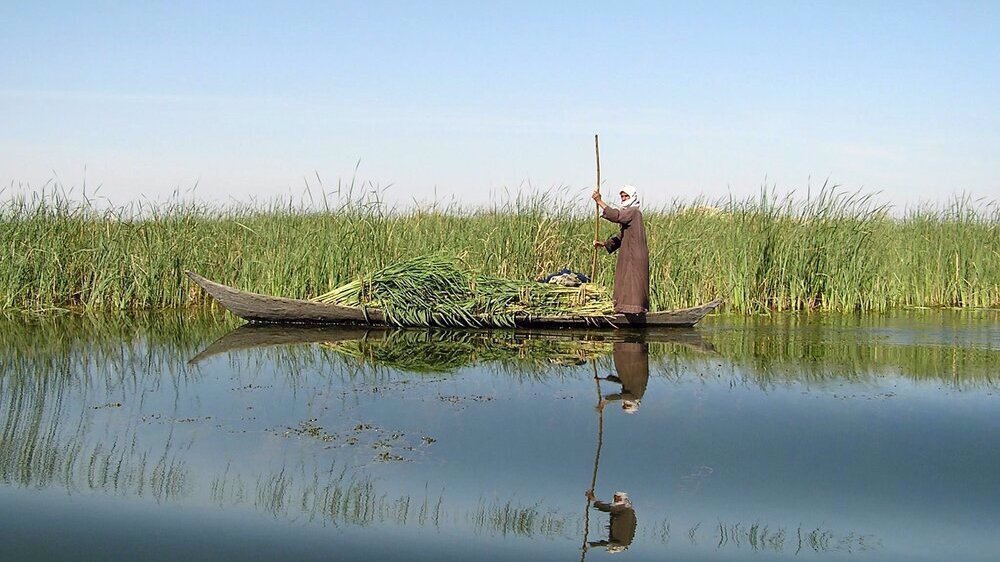
TEHRAN - In Iran’s southeastern corner, where desert landscapes dominate both maps and headlines, water has long been a constant and indispensable force in social and economic life.
Sistan-Baluchestan province, often described solely through the lens of aridity, is in fact shaped by an intricate network of rivers, wetlands, and seasonal lakes that have sustained ecosystems, migration routes, and local economies for centuries.
From the vast Hamun wetlands in the north to the coastal rivers flowing into the Gulf of Oman, these waters form one of Iran’s most complex and ecologically significant hydrological systems.
Hamun wetlands: a transboundary lifeline
At the heart of northern Sistan-Baluchestan lies the Hamun wetland complex, a vast system of shallow lakes and marshes located within a closed inland basin.
At its maximum historical extent, the Hamun system covered approximately 5,700 square kilometers, of which about 3,800 square kilometers lie within Iranian territory, with the remainder in Afghanistan.
Unlike deep permanent lakes, Hamun is characteristically shallow, with water depths fluctuating from less than one meter to a few meters depending on inflow and seasonal conditions.
The wetlands are primarily fed by the Helmand River (Hirmand), Afghanistan’s longest river, which originates in the Hindu Kush mountains and flows for roughly 1,050 kilometers before reaching Iran.
Once it enters Iranian territory, the river disperses into a network of marshes, reed beds, and shallow lakes that together form the Hamun ecosystem.
Ecologically, Hamun has long been one of the most important wetland systems in West and South Asia.
During wet years, surveys recorded more than 170 bird species, including ducks, geese, swans, flamingos, pelicans, coots, and waders.
Seasonal counts documented up to 700,000 migratory waterbirds, arriving mainly from Central Asia, Siberia, and Eastern Europe during autumn and winter migration cycles.
The wetlands also supported fish populations significant enough to sustain local fisheries, with annual catches in productive years reaching several thousand tons.
Beyond birds and fish, Hamun’s reed beds and riparian vegetation provided habitat for mammals such as wolves (Canis lupus), caracals (Caracal caracal), foxes, and gazelles along its margins.
Dense stands of reeds and tamarisk not only stabilized soils but also supplied fodder, building materials, and fuel for surrounding communities.
Economically, the wetlands functioned as a natural engine.
Fishing, livestock grazing on wetland vegetation, and agriculture supported by floodwaters formed the backbone of local livelihoods.
In years of high inflow, Hamun also emerged as a destination for eco-tourism and birdwatching, offering one of West Asia’s most impressive seasonal wildlife spectacles.
Hamun-e Jazmurian: a seasonal giant
Further south, on the border between Sistan-Baluchestan and Kerman provinces, lies Hamun-e Jazmurian, another large but highly seasonal inland wetland.
Spanning approximately 3,300 square kilometers, Jazmurian collects runoff from surrounding highlands and is primarily fed by the Bampur River and tributaries linked to the Halil River system.
Like Hamun, Jazmurian is shallow and episodic, transforming from a dry salt flat into a vast water body after periods of heavy rainfall.
During wet phases, it becomes an important stopover for migratory birds and a breeding ground for aquatic species.
Salt-tolerant vegetation dominates its fringes, creating a transitional ecosystem between desert and wetland that plays a role in dust control and microclimate regulation.
From an economic perspective, Jazmurian holds potential for nature-based tourism, particularly for desert-wetland landscapes that attract researchers, photographers, and eco-tourists seeking rare hydrological phenomena in arid regions.
Lipar wetland: a coastal rarity
In the province’s southeastern coastal zone, near the Gulf of Oman, lies the Lipar wetland, one of Iran’s most visually distinctive water bodies.
Unlike inland wetlands, Lipar is a coastal lagoon, periodically connected to the sea and influenced by both freshwater inflow and marine conditions.
Lipar is internationally noted for its seasonal pink coloration, caused by high concentrations of plankton and salt-tolerant microorganisms.
Though relatively small compared to Hamun, the wetland supports a range of coastal and migratory birds, including flamingos, herons, and shorebirds.
Surrounding vegetation consists of salt-resistant plant communities and, in nearby estuaries, mangrove-associated species.
Lipar’s economic value lies primarily in eco-tourism, photography, and coastal nature tourism, offering a rare visual landscape along Iran’s southern shores.
Rivers that sustain the province
The province’s wetlands are inseparable from its rivers.
The Helmand river, as the primary water source for Hamun, remains the most influential.
Its flow determines not only wetland health but also agricultural productivity and dust suppression across northern Sistan.
In central and southern parts of the province, the Bampur River plays a similarly vital role.
Originating in the highlands near Iranshahr, the river flows for approximately 175 kilometers before terminating in the Jazmurian basin.
Along its course, it supports date palm groves, small-scale agriculture, and riparian vegetation that creates green corridors through otherwise arid terrain.
Further south, the Bahu Kalat river—the longest river in southern Sistan-Baluchestan—travels roughly 340 kilometers from mountainous regions toward the Gulf of Oman, draining a basin of nearly 8,000 square kilometers.
Unlike inland rivers, Bahu Kalat ultimately reaches the sea, forming estuaries and wetlands near the coast.
Its lower reaches are among the few habitats in Iran associated with mangrove-linked ecosystems and are known for hosting the Iranian mugger crocodile (Gavial-e Gando) in certain stretches.
Other rivers, including Kajoo, Kahir (Nikshahr), Mashkel (Mashkid), Rabach, and Sianjan, function as seasonal or semi-permanent waterways.
Though smaller in scale, they are essential for groundwater recharge, vegetation maintenance, and localized agriculture.
Environmental and economic significance
Collectively, the rivers, lakes, and wetlands of Sistan-Baluchestan perform critical environmental functions.
They regulate regional climate extremes, reduce dust storms, support biodiversity corridors, and sustain one of the most important migratory bird routes in Southwest Asia.
Economically, they underpin agriculture, fisheries, livestock grazing, and a growing potential for eco-tourism, especially birdwatching, wetland tourism, and river-based recreation.
Far from being marginal or incidental, these water systems define the province’s ecological identity.
Understanding them not as isolated features but as an interconnected hydrological network reveals Sistan-Baluchestan as a region where water—though variable—has always shaped life, movement, and opportunity at the edge of the desert.
Leave a Comment